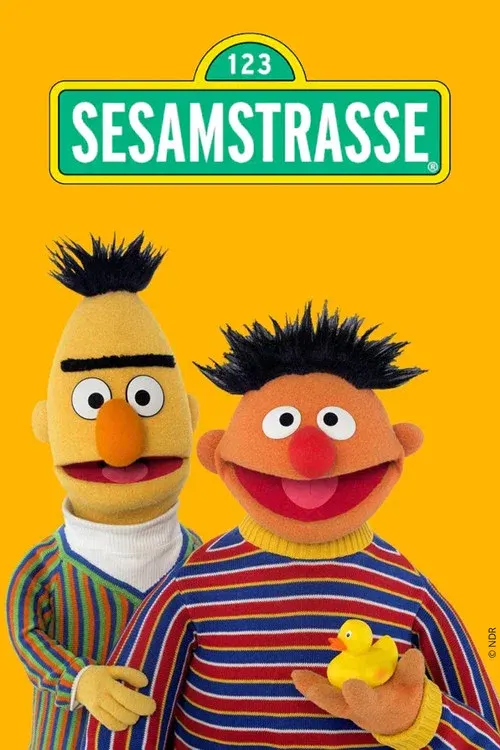
Sesamstraße is the German-language version of Sesame Street, a children's television series. It airs primarily in Germany and the surrounding German-speaking countries. The show premièred on 8 January 1973, Sesamstraße has been running on Norddeutscher Rundfunk since 1973; it's now in its 40th season. Sesamstraße is also broadcast on Das Erste and KiKa.
Created byLloyd Morrisett
Follow a connection
What to watch after Sesamstraße
A series shortlist from the cached Film Atlas engine. The interactive map may include more titles or newer results. These are similarity matches, not a guarantee of age suitability.
The children's show has been a fixed Sunday morning ritual in German living rooms since 1971. Not only children, but also many adults sit in front of the television every week when the clever orange mouse, his blue elephant buddy and the yellow duck lead the way with short, funny cartoon clips between the "funny and factual stories".
Pumuckl is a Kobold from a German radio play series for children. He is a descendant of the Klabautermänner. He is invisible to people around him except for the master carpenter Eder with whom Pumuckl lives.
Pumuckl was invented by Ellis Kaut for a radio play series of the Bavarian Radio in 1961. Later on it was turned into a very successful TV series. Three movies and a musical also deal with the adventures of the little kobold.
Pumuckl is one of the most popular characters in children's entertainment in Germany and several generations have now grown up with the cheeky but funny little Kobold.
Lindenstraße is a German television show on ARD's Das Erste, one of Germany's two publicly administered TV channels. The first episode was aired on 8 December 1985 and since then new episodes have been broadcast weekly. Its current timeslot on Das Erste is Sundays at 18:50. The events of the Sunday episode usually take place on the Thursday before the show, based on the TV station's original plan of airing the episodes Thursday night. Prior of the start of the show, the timeslot was switched to Sunday evening but the Thursday remained the day the events usually take place as the show shall feature the daily life routine of the protagonists on a working day. Exceptions are the so-called holiday episodes that take place on Sunday, such as for Christmas and Easter and also on important election days.
Setting the pace for other soap operas in Germany, the first episodes were met with mostly bad reviews. However, Lindenstraße soon became one of the most successful shows on German TV.
1, rue Sésame is a French children's television series based on the popular U.S. children's program Sesame Street. The show first aired January 4, 1978 at 6:25 p.m. on TF1. Its musical director was Roger Elcourt, composer Jean Morlier.
The series was executive produced by Michel Berthier from TF1 and Lutrelle Horne from CTW. The show ran for a total of 82 episodes and ceased production in June 1982.
The series is occasionally called Bonjour Sésame, or la Rue Sésame. In October 2005, a new series by Sesame Workshop was launched, called 5, Rue Sésame.
Polizeiruf 110 is a long-running German language detective television series. The first episode was broadcast 27 June 1971 in the German Democratic Republic, and after the dissolution of Fernsehen der DDR the series was picked up by ARD. It was originally created as a counterpart to the West German series Tatort, and quickly became a public favorite.
In 1909, Karl Siebrecht, who has just become an orphan, arrives in Berlin. The 16-year-old is eager to conquer the city for himself in just a few weeks. On the train ride there, he meets Rieke Busch, a girl from the working-class district of Wedding. She accompanies Karl from then on. But he soon realizes that he will have to start at the bottom. His path is characterized by small successes and setbacks. Only later does he make his breakthrough by founding a luggage transportation company. But once again, his success was short-lived as his business partner booted him out. Karl Siebrecht is faced with the ruins of his company. But he does not give up, finds new ways and seems to have achieved another breakthrough. But then the First World War breaks out...
Tatort is a long-running German/Austrian/Swiss crime television series set in various parts of these countries. The show is broadcast on the channels of ARD in Germany, ORF in Austria and SF1 in Switzerland.
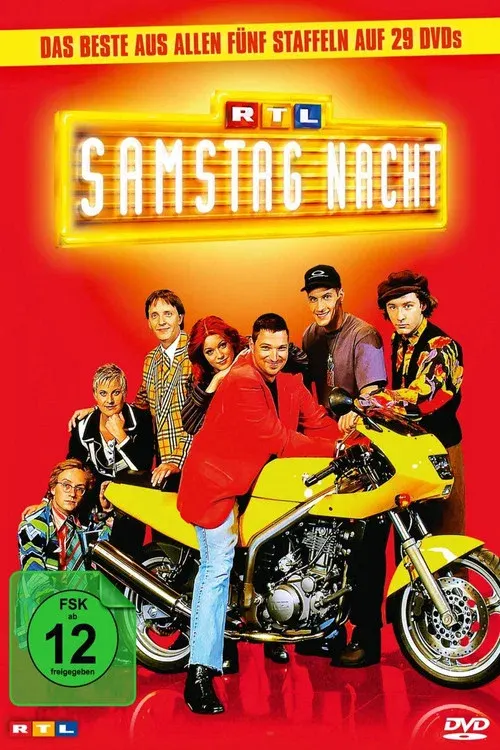
RTL Samstag Nacht was a comedy show, which ran from 6 November 1993 to 23 May 1998 on the German TV network RTL. RTL Samstag Nacht was the first major comedy show in German television, created after the example of the long-running American show Saturday Night Live and broadcast late on Saturday night. It helped comedy in German television to a breakthrough and was a model for several later comedy shows. Karl Ranseier was a recurring character featured in fake news reports telling about his death at the end of each episode. The name Karl Ranseier has become a catchphrase in Germany that has led to its own joke category of Ranseiers which are in widespread usage outside of the comedy origin.
Film Atlas combines story similarity, series metadata and TMDB relationship signals. Shared networks can support a match; audience safeguards help avoid poor fits. The explanations above come from the engine’s recorded evidence—not invented reviews.
A similarity match is different from a quality rating. Use the map to explore the connections and decide what fits your mood.