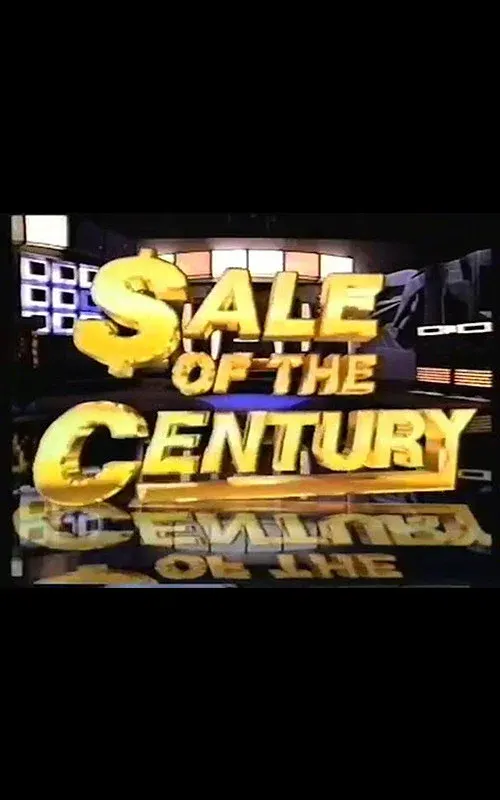
$ale of the Century was an Australian game show that aired on the Nine Network from 14 July 1980 – 29 November 2001. Tony Barber hosted a game show with essentially the same format under the title Temptation from 1970 to 1976, and was also the initial host of Sale for over a decade before being replaced by Glenn Ridge in 1991. Hostesses over the years have included Victoria Nicholls, Delvene Delaney, Alyce Platt, Jo Bailey, Nicky Buckley and Karina Brown. Pete Smith was Sale's announcer for the majority of its run. Ron Neate was announcer for only the first ten episodes in 1980 before Smith took over.
From 30 May 2005 – 23 January 2009, the series was revived under its original Australian title, Temptation.
The Sale of the Century format has been used internationally.
Follow a connection
What to watch after Sale of the Century
A series shortlist from the cached Film Atlas engine. The interactive map may include more titles or newer results. These are similarity matches, not a guarantee of age suitability.
Le Juste Prix is a French adaptation of the American game show The Price Is Right that airs on TF1. It first premiered in 1988 and ran until the original version was canceled in 2001. In 2002 a brief sequel, Le Juste Euro, ran on France 2 and was hosted by Patrice Laffont, it only ran for two episodes. On July 27, 2009 a new version of Le Juste Prix premiered on TF1. The current version is hosted by Vincent Lagaf with Gerard Vivès as announcer.
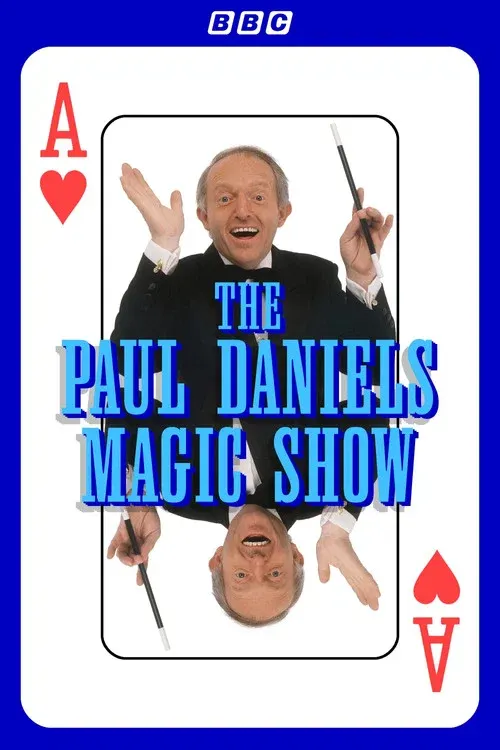
A British magic show and variety show that aired on BBC1 from 9 June 1979 to 18 June 1994. Daniels' assistant throughout the series was Debbie McGee, whom he married in 1988. At its peak in the 1980s, the show regularly attracted viewing figures of 15 million and was sold to 43 countries.
Blankety Blank is a British comedy game show based on the 1977–1979 Australian game show Blankety Blanks.
The British version ran from 18 January 1979 to 12 March 1990 on BBC One, hosted first by Terry Wogan and later by Les Dawson. Regular members of the celebrity panel on this version included Kenny Everett, Lorraine Chase, Gareth Hunt, Gary Davies, and Cheryl Baker.
A revival fronted by Lily Savage was produced by the BBC from 26 December 1997 to 28 December 1999, followed by ITV from 7 January 2001 to 10 August 2002. This version was produced by Grundy, then Thames.
Tattletales is an American game show which first aired on the CBS daytime schedule on February 18, 1974. It was hosted by Bert Convy, with several announcers, including Jack Clark, Gene Wood, Johnny Olson and John Harlan, providing the voiceover at various times.
The show's premise involved questions asked about celebrity couples' personal lives and was based on He Said, She Said, a syndicated Goodson-Todman show that aired during the 1969—1970 season.
Jackpot! is a television game show seen in three different runs between 1974 and 1990. Geoff Edwards hosted the original version of this Bob Stewart production from January 7, 1974 until September 26, 1975 on NBC. A second version, produced in Canada, aired from September 30, 1985 to December 30, 1988 on the USA Network in the U.S. and was hosted by Mike Darrow. A third version, again hosted by Edwards, ran from September 18, 1989 to March 16, 1990 in syndication and was filmed in Glendale, California.
Elements of Jackpot! were later used in the GSN game show Hollywood Showdown. Its producer, Sande Stewart, became a production partner of his father during the 1980s.
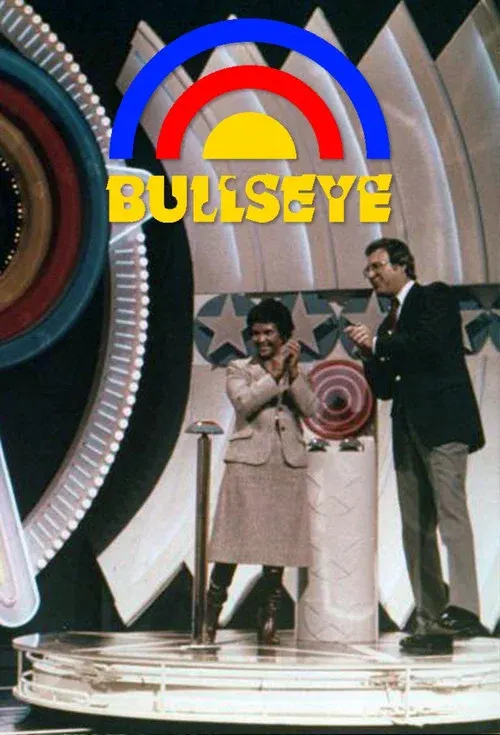
Bullseye is an American game show that aired in syndication from September 29, 1980 to September 24, 1982. Jim Lange was the host, and the program was produced by Jack Barry and Dan Enright. Jay Stewart was the announcer for the first season, and Charlie O'Donnell announced for the second season. The series' executive producer was Ron Greenberg.
Trivia Trap is an American game show produced by Mark Goodson Productions. It was created by producer Goodson and originally ran from October 8, 1984 to April 5, 1985 on ABC. The game featured two teams of three contestants each who competed against each other to answer trivia questions in various formats. Bob Eubanks was the host, and Gene Wood announced during the first two weeks. Charlie O'Donnell announced during the third week and was replaced by Bob Hilton for the remainder of the series.
Go is an American television game show created by Bob Stewart and aired on NBC from October 3, 1983 to January 20, 1984. The show featured two teams, each composed of four contestants and a celebrity. The teams had to construct questions one word at a time to convey a word or phrase to their teammates. The concept of Go was based on a bonus round used on Chain Reaction, another game show created by Stewart.
Los Angeles and Buffalo meteorologist Kevin O'Connell was the show's host, and Johnny Gilbert was the announcer.
Go aired at 12:00 Noon Eastern on NBC, long a problem timeslot for the three major broadcast networks at the time as their local affiliates would often preempt network programming to air newscasts or other programming and the shows the networks would place there would often suffer in the ratings. Go proved to be one of those programs, as NBC ended the series after only sixteen weeks of episodes had aired.
The Generation Game was a British game show produced by the BBC in which four teams of two competed to win prizes. The programme was first broadcast in 1971 under the title Bruce Forsyth and the Generation Game and ran until 1982, and again from 1990 until 2002.
The show was based on the Dutch TV show Een van de acht, "One of the Eight", the format devised in 1969 by Theo Uittenbogaard for VARA Television. Mrs. Mies Bouwman - a popular Dutch talk show host and presenter of the show - came up with the idea of the conveyor belt. She had seen it on a German programme and wanted to incorporate it into the show.
Another antecedent for the gameshow was 'Sunday Night at the London Palladium' on ATV, which had a game called Beat the Clock, taken from an American gameshow. It featured married couples playing silly games within a certain time to win prize money. This was hosted by Bruce Forsyth from 1958, and he took the idea with him when he went over to the BBC.
Family Feud was an Australian game show based on the American show of the same name. It ran on the Nine Network from 1977–1984, and on the Seven Network from 1989-1996.
Film Atlas combines story similarity, series metadata and TMDB relationship signals. Shared networks can support a match; audience safeguards help avoid poor fits. The explanations above come from the engine’s recorded evidence—not invented reviews.
A similarity match is different from a quality rating. Use the map to explore the connections and decide what fits your mood.