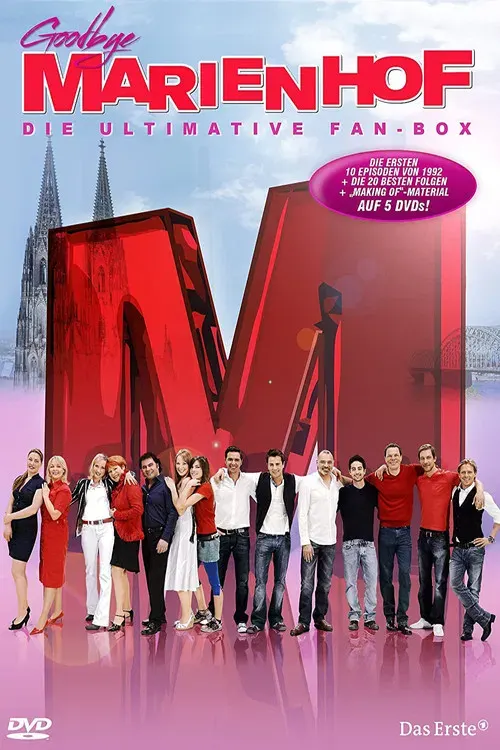
Marienhof is a German soap opera, first shown on October 1, 1992 on German TV channel, Das Erste. It started as a weekly series, before becoming a daily program on January 2, 1995. The show was canceled in February 2011 and aired its last episode on June 15, 2011. In the 90s, the Marienhof became a huge success in Finland and remained a fan favorite until it was canceled to license problems.
Over the years, the show became known for tackling several social issues, such as homosexuality, homelessness, private bankruptcy, rape, drug abuse, AIDS, child abuse, suicide, cancer, adultery and murder. The show focuses on the everyday life of the residents of the Marienhof, a fictional suburb in Cologne.
Follow a connection
What to watch after Marienhof
A series shortlist from the cached Film Atlas engine. The interactive map may include more titles or newer results. These are similarity matches, not a guarantee of age suitability.
Salatut elämät (Secret Lives) is a Finnish television soap opera that premiered on MTV3 on 25 January 1999. The series' storylines follow the daily lives of several families who live in the same apartment block in Helsinki.
Unter uns is a German television soap opera, first broadcast on RTL on 28 November 1994. Centered around the lives of the people in a residential house, which is set in the fictional Schillerallee in Cologne. Since the show debuted the baker's family Weigel is the series core family. Unter uns isn't based on a foreign soap opera like Verbotene Liebe or Gute Zeiten, schlechte Zeiten. After Gute Zeiten, schlechte Zeiten, the show was the second daily soap for RTL, followed years later in 2006 by Alles was zählt. The show aired its 3,500th episode on 30 December 2008.
Alles was zählt is a German television soap opera first broadcast on RTL on September 4, 2006. The original plot revolved around Diana Sommer's dream to become a world class ice skater. She fell in love with Julian Herzog, who signed her at the prestigious Steinkamp Sport and Wellness Center, run by the unscrupulous Steinkamp dynasty. Diana and Julian eventually became a couple, but in November 2007, Julian suffered a brain hemorrhage and died during their wedding. Diana remained in Essen until January 2009, when she left to join a skating centre in Halle. The story continues to revolve around the Steinkamp Sport and Wellness Centre and its quest to become a sporting powerhouse, as well as the lives of the characters who work at and around the Centre.
Rote Rosen is a German telenovela produced by Studio Hamburg Serienwerft Lüneburg and broadcast by Das Erste since November 6, 2006. The show is a complex telenovela, who tells one love story every season about women in their forties.
M jak miłość is a Polish soap opera, revolving around the multiple generations of the Mostowiak family. The series premiered on November 4, 2000 on TVP2, primarily as a weekly drama, and after one season shifting into a new timeslot and extending to two episodes per week. For the last few years the show has been the most watched drama on Polish television. Its popularity led to a Russian adaptation, entitled Lyubov kak Lyubov.
The series is also broadcast on the international channel TVP Polonia with English subtitles.
Family is the most important thing, and the children of Władysław and Maria Lubicz from Warsaw can always count on each other, no matter what surprises life offers.
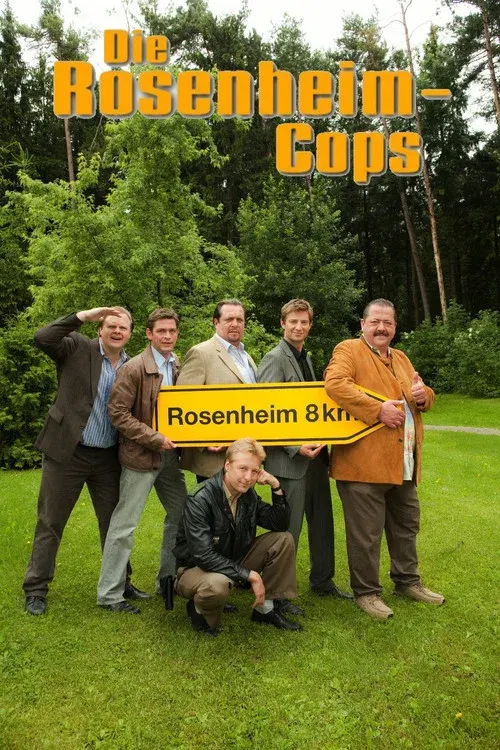
A team of inspectors investigates murders in and around the small Upper Bavarian town of Rosenheim, and they still have plenty of time to see idyllic landscapes and luxurious pre-alpine villas and enjoy sumptuous Bavarian fare with beer.
SOKO Kitzbühel is an Austrian television series produced by ORF and ZDF. It is a spin-off of the German crime series SOKO 5113. It is set in the renowned Tyrolean tourist centre of Kitzbühel. The production company "beo-Film" has produced the show since 2001. The German abbreviation SOKO stands for Sonderkommission, "special commission", a task force with specific duties.
Film Atlas combines story similarity, series metadata and TMDB relationship signals. Shared networks can support a match; audience safeguards help avoid poor fits. The explanations above come from the engine’s recorded evidence—not invented reviews.
A similarity match is different from a quality rating. Use the map to explore the connections and decide what fits your mood.