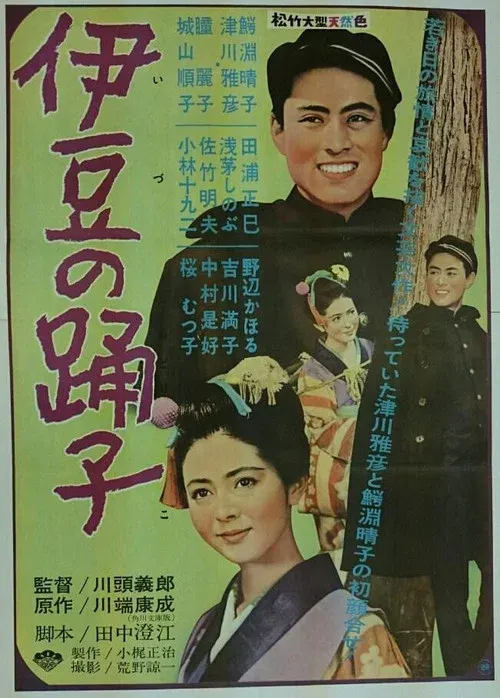
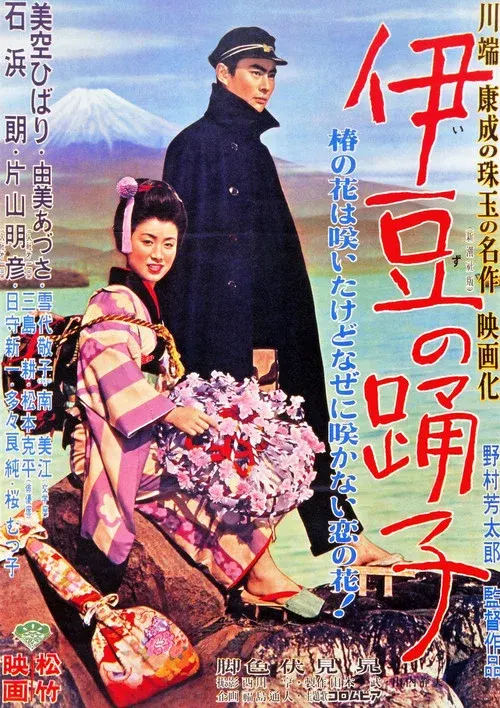
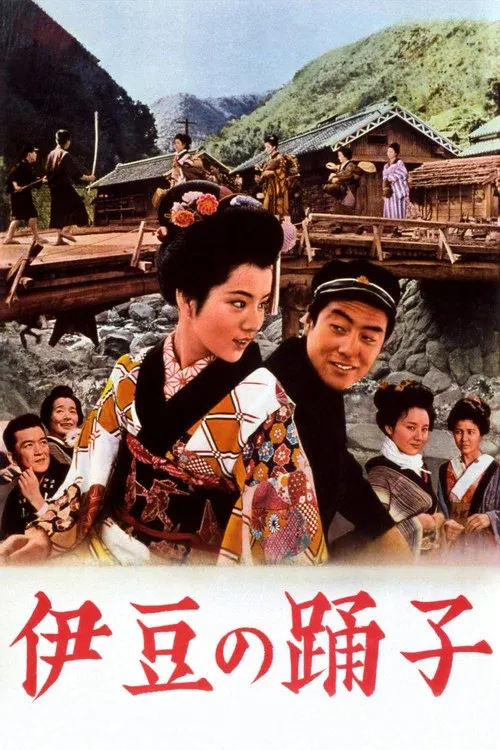
Love story between a student and girl whose parents are itinerant entertainers. Set in Japan in the 1920's.
Directed byYoshiro Kawazu
Follow a connection
What to watch after The Izu Dancer
A feature-film shortlist from the cached Film Atlas engine. The interactive map may include more titles or newer results. These are similarity matches, not a guarantee of age suitability.
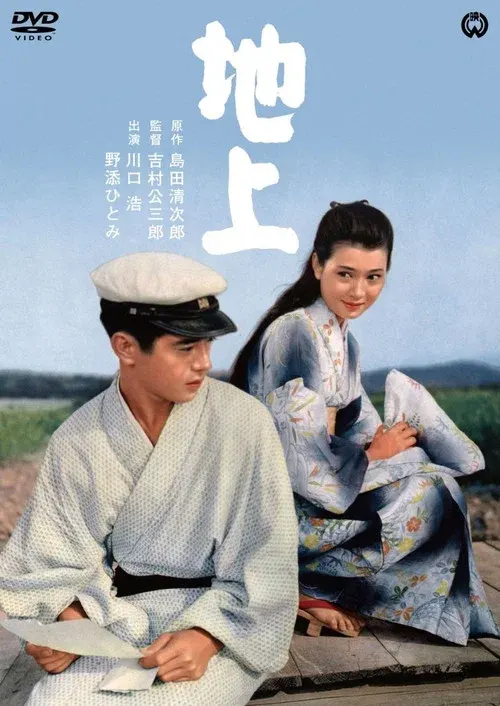
A dancer girl in a touring company met a high school boy in a port town. The story is about their first love that is very touching and sorrowful. An adaptation of the Kawabata Yasunari short story.
A woman marries, gives birth to a stillborn child, and divorces, falls in love with a hotel-keeper, only to find herself subordinated to his drive for success, takes up with a tailor who cannot console himself with her strong personality.
During his idle journey on the Izu Peninsula, a university student, Kawasaki, encounters a group of traveling entertainers – including Kaoru (Sayuri Yoshinaga), one of the “odoriko”. Kawasaki is taken and cannot take his eyes off her. When he is invited to stay at the same lodgings, the two grow closer. In time, the two come to learn the pain of love.
Ichiro’s family used to be a large landowner, but now he is living in poverty with his mother. His mother works hard to get her son through school. Under such circumstances, Ichiro meets Wakako, the daughter of a wealthy man, and they fall in love with each other, but they are opposed by those around them because of their different social status.
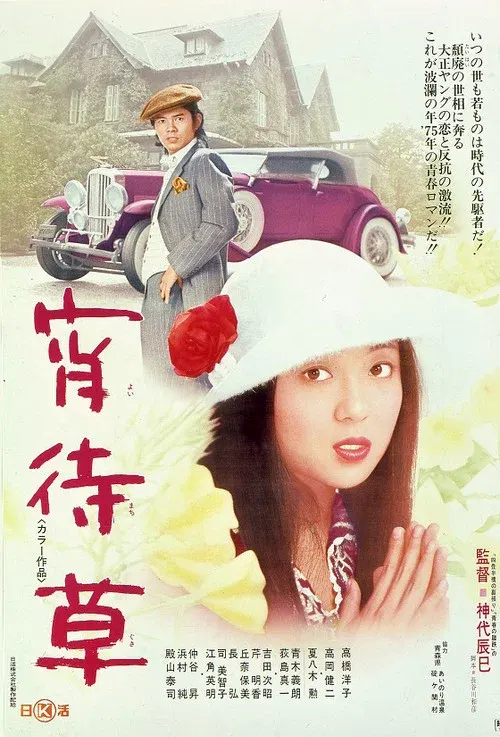
The Taisho era was a time of turbulence in Japan. From new marks of modernity to full-blown riots, a sense of revolution filled the air. The Dam Dam Group is a small anarchist organization lead by Daijiro, a silver tongued "Benshi", a performer who provides narratives for silent films, playing multiple roles. In other words, he was a master at the art of deception, a handy talent when it came to 'doing jobs' for his group. His revolutionary ideals attracted many to his squadron, but among them was a young girl who was oblivious to his group's activities. Her name was Shino.
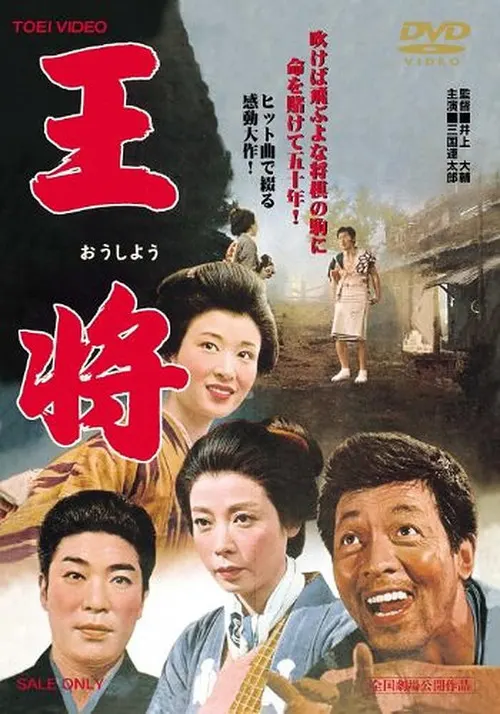
The film takes place at the junction of the two eras of Meiji and Taisho. Sakata Sankichi, an uneducated zori sandal maker, becomes a professional shogi player through his genius shogi skills and lives a fanatically devoted shogi game supported by the love of his family. This is the 3rd adaptation of Hideji Hojo's famous play.
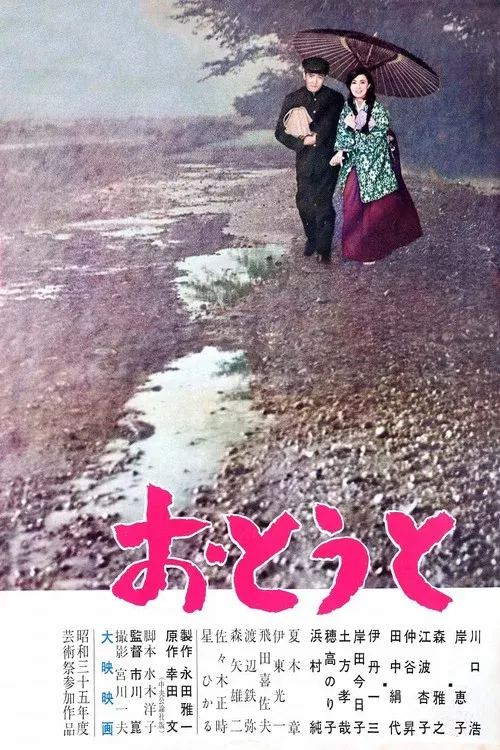
Set in 1926 when Japanese tradition was much stronger, this drama looks at the inner workings of a small family, especially the relationship between a sister and brother.
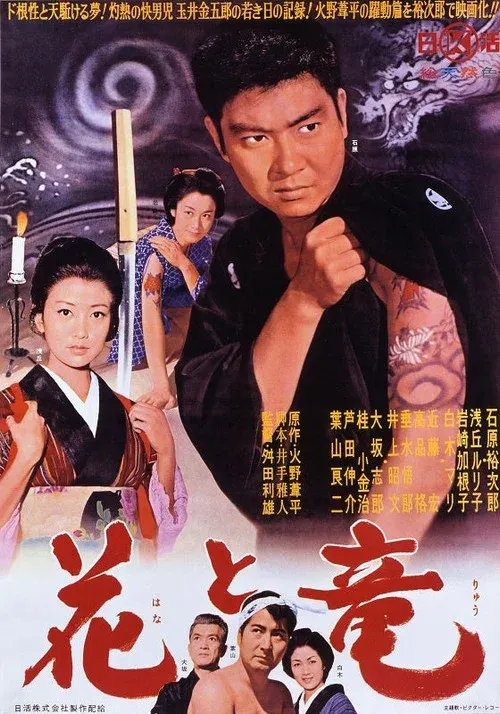
In the late 1890s, coal is a precious new natural resource. During an era of rapid economic growth, dreams are instilled into the lives of many across Japan. A vigorous young man with a look of fearless determination, sets foot on the northern part of Kyushu, an area where Yakuza thrived. His name is Kingoro Tamai (Yujiro Ishihara). With plans to travel the world, Kingoro worked diligently at a coal mine. His loyalty and hard work earned the respect of his peers, his courage won the heart of the beautiful Mon (Ruriko Asaoka), and his success evoked jealousy in his enemies.
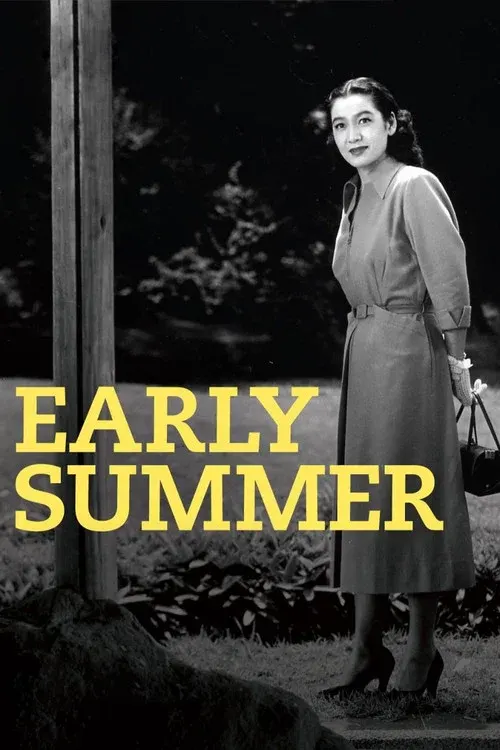
In postwar Tokyo, Noriko lives with her extended family. Although she enjoys her career and her social life, her more traditional family worries about her single marital status at the advanced age of 28. 40-year-old business associate Takako proposes, Noriko's family press her into accepting, but when her widowed childhood friend Kenkichi returns to the neighborhood, she finds her heart leading in another direction.
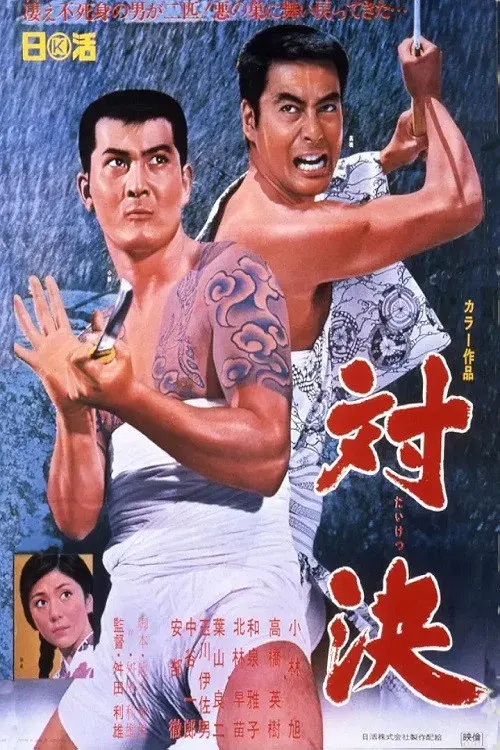
Late Taishō period. The Shibatora family, led by Naojirō, held power over the Tomigawara area in Jōshū. After launching an attack on the Takayasu family for encroaching on their territory, they were instead ambushed by Takayasu's forces. Taking full responsibility, Naojirō turned himself in to the police. Six years later, upon his release, he is enraged to find that everything has changed drastically from how it once was.
Film Atlas combines story similarity, movie metadata and TMDB relationship signals. Shared studios can support a match; audience and film-format safeguards help avoid poor fits. The explanations above come from the engine’s recorded evidence—not invented reviews.
A similarity match is different from a quality rating. Use the map to explore the connections and decide what fits your mood.